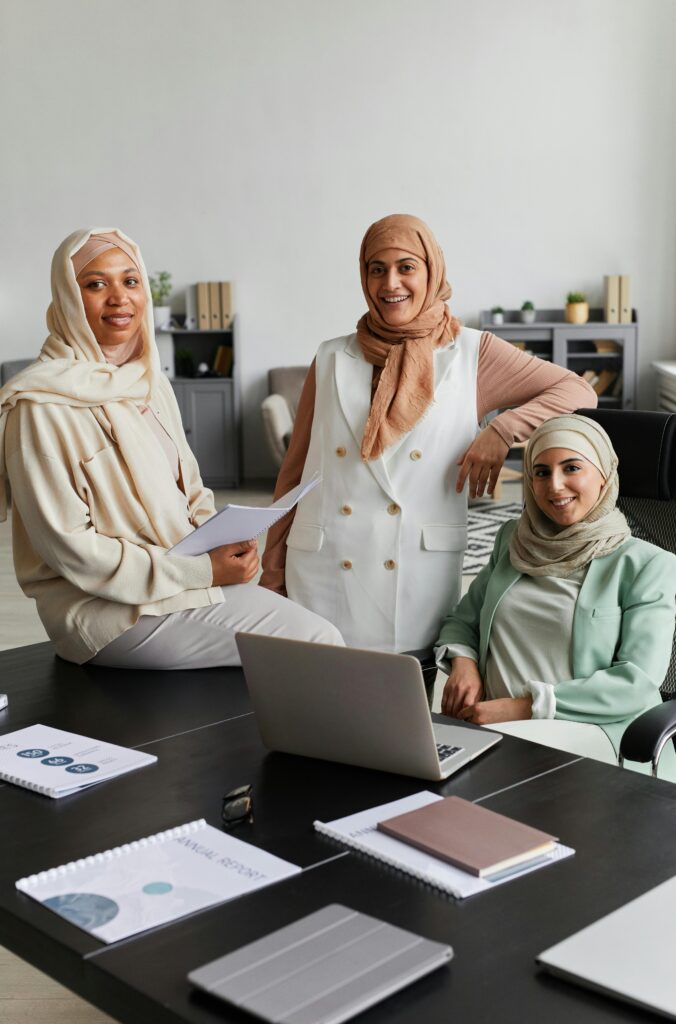
Remote Work as Ethical Transformation: Trust, Change, and the Lived Realities of Muslim Women
The rapid institutionalization of remote and flexible work in the aftermath of the COVID-19 pandemic represents a profound shift in how organizations conceive of work, control, and accountability. While this transformation is often framed through narratives of efficiency, flexibility, and technological progress, its ethical dimensions remain largely underexamined—particularly in relation to marginalized and faith-based identities. This article situates remote work within theories of discontinuous and planned organizational change, arguing that trust constitutes both the structural and moral foundation of sustainable remote work. By centering the lived experiences of Muslim women and drawing on Islamic ethical principles such as amānah (trust), ʿadl (justice), and mīzān (balance), the paper challenges dominant organizational logics and advances an ethically grounded framework for understanding remote work not merely as a technical adjustment, but as a moral reconfiguration of organizational life.